
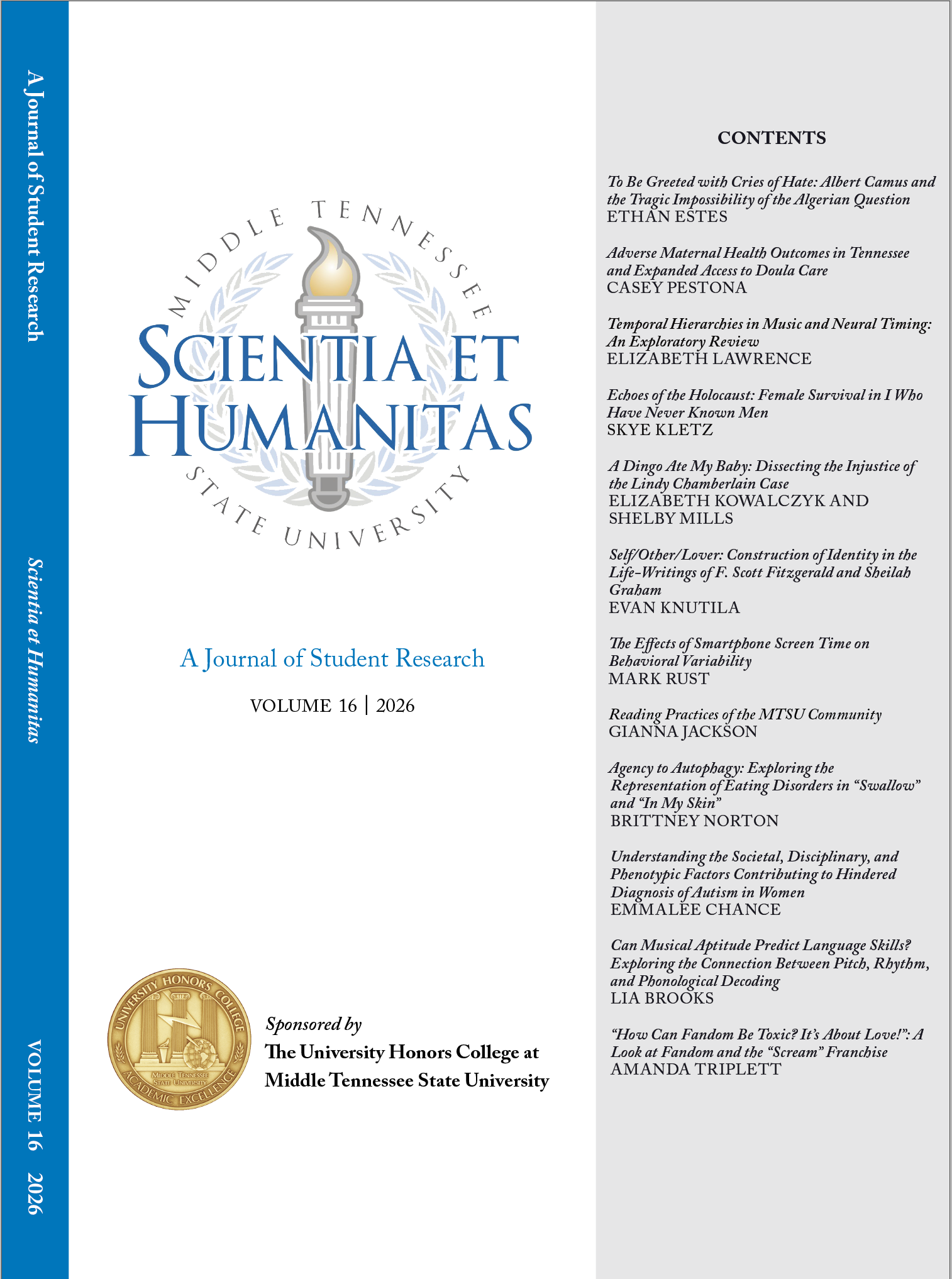
A Dingo Ate My Baby: Dissecting the Injustice of the Lindy Chamberlain Case*
*Deans' Distinguished Essay Winner
Abstract
This paper examines the Lindy Chamberlain case as a cautionary tale of how flawed forensic practice, cognitive bias, and sensationalistic media coverage can lead to wrongful convictions. Using a case study approach that lays out the primary timeline, reporting, and later forensic reviews, the piece reconstructs the sequence of investigative and evidentiary failures that led to Lindy Chamberlain's 1982 conviction and its eventual reversal. Key findings show that unreliable, presumptive serology, mishandling and staging of physical evidence, and the overreliance on expert testimony all contributed to a distorted evidentiary record; simultaneously, gendered social expectations, religious rhetoric, and commercial media representation amplified public and judicial suspicion. The discovery of Azaria's matinee jacket and subsequent forensic reevaluation were decisive in overturning the conviction, demonstrating the consequences of both technical error and media bias. Drawing lessons to apply to contemporary practice, the paper argues for validation of forensic methods, routine use of confirmatory testing, careful evidence handling protocols, and structured efforts to mitigate cognitive and social bias in both investigations and courtrooms. The Chamberlain saga remains a reminder that while technological advances such as DNA profiling and molecular body fluid identification enhance forensic accuracy, institutional safeguards and critical scrutiny of expert evidence remain essential to prevent miscarriages of justice.
Downloads
Published
Issue
Section
License
Copyright (c) 2026 Mills, Shelby, Kowalczyk, Elizabeth

This work is licensed under a Creative Commons Attribution-NonCommercial-NoDerivatives 4.0 International License.
The author(s) retains/retain the copyright to the work, but grants Scientia et Humanitas the right to publish, display, and distribute the work in the Scientia et Humanitas journal, in print and electronic format. Please see our Author Agreement for more details. You can download this as a PDF and fill/edit electronically.